
Word Search Bliss
PlaySimple GamesWord
5.0449.00 Reviews
- Version
- 1.20.0
- Installs
- 100.00K
- Age Rating
- Everyone
Screenshots
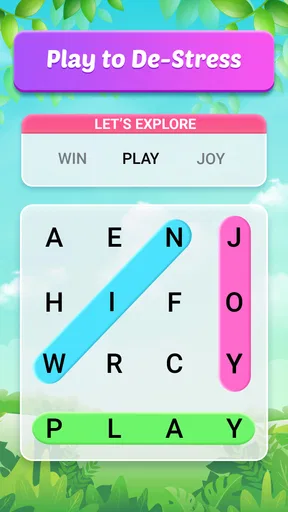
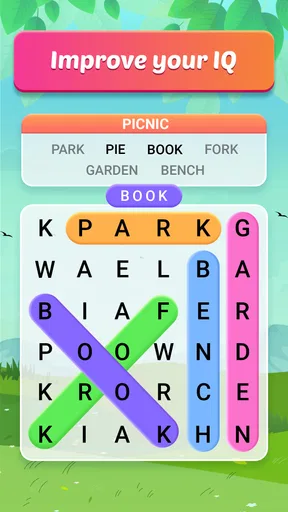
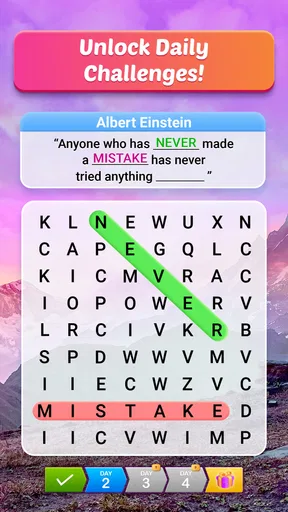
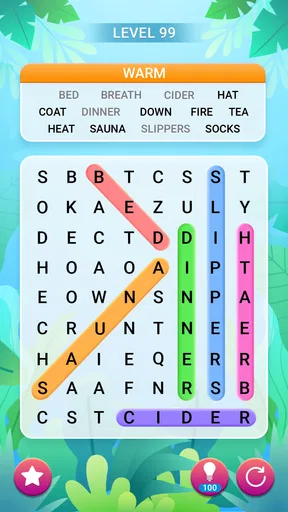
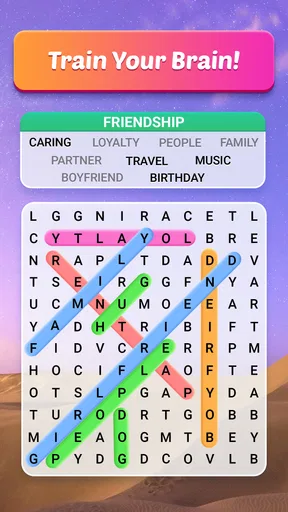
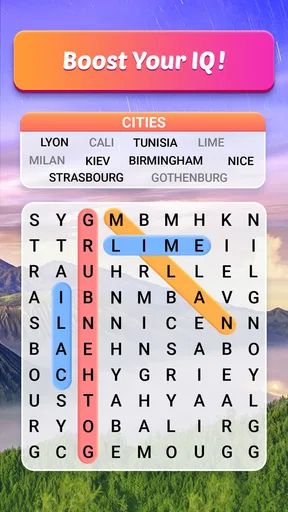
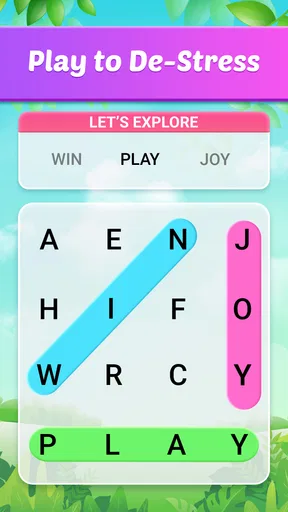
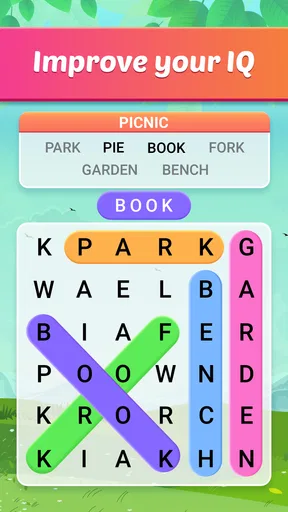
Our Review of Word Search Bliss
 Analysis by Appyee
I approached Word Search Bliss expecting a familiar word-search game, but its strongest quality is the way it turns a simple puzzle into a quiet visual routine. The basic task remains easy to understand: find hidden words in a letter grid, move through puzzles, and let the scenery provide a calmer backdrop than a typical arcade-style interface. That simplicity is the point. I never felt pushed to learn a complicated system before enjoying the first puzzle.
Developed by PlaySimple Games, this free word game is aimed at people who want short sessions rather than an intense challenge. Its store summary focuses on classic word searches, beautiful scenery, and relaxation, and that description matches the overall direction I experienced. The game does not try to disguise the puzzle beneath layers of unrelated mechanics. Instead, it keeps the search itself at the center and uses presentation to make repeated rounds feel more pleasant.
The audience response is unusually strong, with a 5.0 average from around 32 thousand ratings and more than 100 thousand installs. Those figures suggest that the straightforward approach is connecting with many players. I would still treat popularity as a starting point rather than a guarantee, because the real question is whether you enjoy scanning letters at a measured pace. If you prefer word games built around competition, rapid timers, or a large vocabulary challenge, this may feel too gentle.
A calm word search shaped by scenery, sound, and pace
I found that Word Search Bliss works best when I treat it as a small, intentional pause rather than a game to rush through. In this section, I look at how its visual setting and gentle rhythm shape that pause, and why those choices matter more than adding layers of complexity. That leads naturally to a closer look at the way the puzzles themselves fit into everyday play.
The first few puzzles set expectations clearly
My first impression was that Word Search Bliss wants to be opened during small gaps in the day. It suits the moment after finishing a task, while waiting for an appointment, or when I want something interactive without committing to a long story or demanding strategy session. The familiar grid makes the entry point immediate, while the surrounding scenery gives the experience a more deliberate identity than a plain puzzle board.
That accessibility is especially useful for players who do not normally play games. The content rating is Everyone, and the design direction feels consistent with that broad audience. There is no need to understand a fictional universe, memorize a complicated control scheme, or build a character before the game becomes playable. I can pick it up, search for a few words, and stop when my attention moves elsewhere.
The game is free to download, which makes trying it uncomplicated. It does include optional in-app purchases ranging from $0.99 to $49.99 per item. That range is worth keeping in mind before settling into a regular routine. A player who wants a completely purchase-free experience should pay attention to how optional offers fit into their own tolerance, while someone comfortable with occasional extras can simply treat them as separate from the core word-search activity.
One practical strength is the low technical entry point. The current version is 1.20.0 and supports Android 8.0 or later, so it is not restricted to only the newest phones. I would still leave enough free storage and keep the game updated like any other app, but its stated operating-system requirement makes it approachable for people using an older compatible device.
Scenery gives the puzzles a recognizable emotional language
The visual setting does more than decorate the edges of the board. Natural-looking scenery and attractive backgrounds establish a softer mood, which changes how I interpret the same letter-search mechanic. In a basic utility-style word search, the grid can feel like a task list. Here, the setting encourages me to slow down and treat each round as a brief visual break.
This art direction works because it does not appear to compete with the letters. The puzzle still needs to remain readable, and the scenery functions best when it supports the board rather than stealing attention from it. The contrast between a structured grid and a more open background creates a useful separation: my eyes focus on the search area, then relax when I look away from it.
There is also a subtle benefit for mood management. When I am tired, I generally do not want a game that fills the screen with urgent alerts, aggressive effects, or constant pressure. The scenic approach makes the activity feel closer to a short mindfulness exercise than a contest. That does not make the word search deeper, but it does make repetition easier to accept.
Players should not mistake the scenery for a replacement for variety in the puzzles. The core interaction remains finding words in a grid. If your enjoyment depends on elaborate environments that change the rules or reveal a rich narrative, the background treatment may feel limited. I see it as framing: effective, pleasant, and important to the mood, but not the main source of gameplay depth.
Sound and rhythm keep the experience from becoming mechanical
Sound matters more in a relaxing puzzle than many people expect. A letter grid can become visually tiring when every round follows the same pattern, so gentle audio and restrained feedback help shape the rhythm of play. In my view, the best use of sound here is not to demand attention but to make selections feel finished and progress feel natural.
The pacing complements that approach. Word searches create their own small cycle: scan, recognize a possible word, trace it, receive confirmation, and return to scanning. The game’s relaxed presentation gives that cycle room to breathe. I did not feel that every move needed to be made instantly, which is valuable when playing in a noisy environment, during a break, or at the end of the day.
A useful way to play is to treat each puzzle as a fixed pause rather than an endless session. I might complete one round with a drink, then close the game instead of continuing automatically. This keeps the calming quality intact and prevents the familiar “just one more” loop from turning a restful activity into another source of screen fatigue.
The trade-off is that players who rely on strong audio feedback may find the experience less compelling than an action game or a highly animated puzzle title. The atmosphere is intentionally understated. It rewards attention that wanders back to the grid, not constant sensory stimulation. For me, that restraint is a strength, but it will not satisfy someone looking for dramatic sound design or a powerful musical identity.
The mechanics fit short, low-pressure sessions
Word Search Bliss succeeds mechanically because its presentation does not promise more than the central puzzle can deliver. I search for words, trace them through the letters, and continue through the available sequence. That familiar structure makes the game instantly usable, while the visual setting gives the routine a reason to feel more inviting than a generic word-search tool.
One non-obvious advantage of this format is that attention can be adjusted without abandoning the game. When I am alert, I can scan the grid systematically and look for patterns such as unusual starting letters or likely word directions. When I am mentally tired, I can search more casually and let the next recognizable cluster guide me. The same puzzle supports different levels of concentration.
I also found that the game can work as a transition activity. Rather than opening a social feed when I need to reset between errands or work, a single word search gives my mind one contained problem. It is not a substitute for rest, but it is more focused than passive scrolling and less demanding than a competitive game. That makes the title particularly suitable for short, repeatable breaks.
Another useful habit is to change the way I scan instead of staring at the whole board. I can first look for uncommon letters, then inspect likely horizontal and vertical paths, and finally check diagonals. This approach reduces random eye movement and makes the puzzle feel more deliberate. It is a simple technique, but it helps prevent the grid from becoming a blur after several rounds.
Hints, assistance, or progression conveniences can change the balance of a word-search game, so players should decide early how much help they want to use. I prefer attempting a puzzle independently before considering any aid. That preserves the small satisfaction of recognition and keeps the activity from becoming a sequence of automatic taps. Players who mainly want relaxation may reasonably choose the opposite approach and use help whenever the search stops feeling pleasant.
The main mechanical limitation is repetition. The basic action is intentionally narrow, and no amount of scenery can completely remove that fact. If you need word definitions, spelling lessons, anagram construction, or competitive scoring, a crossword, spelling game, or multiplayer word title may be a better fit. Word Search Bliss is strongest when the pleasure comes from spotting patterns, not from developing a broad language strategy.
Who will enjoy it, and who should choose something else?
I would recommend it to players who like classic word searches but want a warmer setting than a bare grid. It is also a good option for casual players, older family members who prefer immediately understandable rules, and anyone looking for a quiet game that can be played in brief intervals. The Everyone rating reinforces that broad accessibility, although individual comfort with screen size, contrast, and visual density will still vary by device.
It may also suit people who are trying to reduce the intensity of their mobile gaming. There are no complicated controls to master, and the scenic presentation encourages a slower tempo. I can imagine using it during a morning coffee, after a long commute, or before bed when I want something more active than watching a video but less stimulating than a fast-paced game.
I would skip it if my priority is constant novelty. Players who want branching stories, character progression, elaborate challenges, or competitive leaderboards should look toward other parts of the word-game category. Likewise, anyone who dislikes optional purchase prompts in free games should consider whether the available purchase range will affect their enjoyment, even if they intend to play without buying anything.
Compared with a printed word-search book, the app is more convenient and easier to carry, and its scenery adds a stronger sense of place. A book can be better for people who want no notifications, no digital distractions, and unlimited control over how long they spend on a page. Compared with a plain word-search app, this game has a clearer mood and a more polished leisure identity. Compared with crossword or anagram games, it asks less of vocabulary and more of visual recognition.
Small habits that make the experience better
I found three habits particularly useful. First, I avoid playing with the screen brightness far above the room’s lighting. The scenic backgrounds can be pleasant, but a bright display makes a quiet session feel harsher and can draw attention away from the letters. A comfortable brightness supports the relaxed tone better than maximizing visual intensity.
Second, I use a stopping point before I begin. Completing one puzzle, or playing for a short planned interval, keeps the game in the role of a break. Without that boundary, the ease of starting another search can make the session longer than intended. This is especially relevant for bedtime, where a calming game can still keep me looking at a screen if I do not decide when to stop.
Third, I treat difficult grids as a signal to change my scanning method rather than immediately assuming I have overlooked something obvious. I look for the first and last letters of likely words, inspect diagonals separately, and briefly move my eyes away from the board before returning. That reset often works better than repeatedly staring at the same area.
These techniques do not add new systems to the game, but they reveal why its simple design can remain useful. The satisfaction comes from matching the pace and method to my mental state. When I want a challenge, I search without assistance. When I want a calmer pause, I allow myself to play more loosely and stop before the activity becomes tiring.
What the version and pricing mean in everyday use
The current release, version 1.20.0, indicates that the app is being maintained as an active product rather than left as an untouched one-off download. That is reassuring for someone choosing a game to keep on a phone, although an update number alone does not change the fundamental nature of the experience. The important point is that the game remains a focused word-search title rather than expanding into a completely different genre.
The free entry point is helpful for testing the atmosphere before spending anything. I would play several sessions first and decide whether the scenery, pacing, and puzzle routine genuinely fit my habits. If they do, optional purchases can be considered on their own terms. If they do not, there is little reason to pay simply because the presentation is attractive.
For families, the Everyone rating makes the game easier to consider as a broadly suitable casual download. I would still supervise purchasing settings on a shared device, because the listed in-app purchase range means accidental spending is a practical concern for households where more than one person uses the phone. That is not a criticism of the word-search mechanic, but it is part of responsible use of a free game with optional paid items.
The atmosphere verdict
Word Search Bliss is most successful when its art direction, sound, and pacing all serve the same promise: a familiar word search that feels like a quiet scenic pause. The mechanics remain simple, but the presentation gives them a coherent emotional setting. I never saw it as a replacement for a complex word challenge; I saw it as a more restful alternative to one.
My honest recommendation is therefore specific. Choose it if you want accessible letter hunting, attractive scenery, and sessions that can fit around everyday life. Keep your expectations realistic about repetition, and decide how you feel about optional purchases before making the game part of your routine. If you need deep vocabulary training or competitive pressure, another word game will serve you better.
For the right player, though, the narrow focus is exactly why it works. I can open it without preparation, settle into the grid, enjoy the setting, and leave after a contained break. That balance between recognizable mechanics and a carefully shaped mood is the reason I would suggest it to a friend who wants a gentle mobile game rather than another demanding obligation.
Verdict
Strengths of Word Search Bliss
- Large word library keeps puzzles feeling fresh over time.
- Simple interface makes it easy to start playing immediately.
- Helpful hints are available when a puzzle becomes difficult.
- Works well for short sessions during commutes or breaks.
- Suitable for players who prefer relaxed, non-timed gameplay.
Limitations of Word Search Bliss
- Some puzzles may feel repetitive after extended play.
- Difficulty can vary noticeably between individual word grids.
- Ads may interrupt the experience, depending on the version.
- Small text can be harder to read on compact phone screens.
- Limited competitive features may disappoint leaderboard-focused players.
Other Releases by PlaySimple Games
View All


Similar Picks in This Category
View All
Word Search - Word Puzzle Game
Bluetile4.8

Word Search Quest - Puzzles
Blackout Lab4.8

CodyCross: Crossword Puzzles
Fanatee, Inc.4.7

Words of Wonders: Crossword
Fugo Games4.9

Wordscapes: Word puzzle game
PeopleFun4.7

Word Search Explorer
PlaySimple Games4.9
Frequently Asked Questions
What is Word Search Bliss?
Word Search Bliss is a relaxing word puzzle game focused on finding hidden words in themed letter grids. Players swipe across letters to complete each word and progress through a collection of puzzles. The game is designed for casual play, making it suitable for short sessions, although later levels can become more challenging and require greater concentration.
How do you play Word Search Bliss?
To play, review the word list shown with each puzzle and search for those words in the letter grid. Words may appear horizontally, vertically, diagonally, and sometimes in reverse directions, depending on the level design. When you find one, drag your finger from the first letter to the last. Correct answers are highlighted automatically, helping you track your progress.
Does Word Search Bliss work without an internet connection?
Many word-search levels can generally be played offline after the necessary game content has loaded, which is convenient for travel or areas with limited connectivity. However, features such as advertisements, rewards, updates, synchronization, or promotional content may require an internet connection. Availability can vary by version, so it is worth testing offline access after installation.
Is Word Search Bliss free to download and play?
Word Search Bliss is typically available as a free download, but the free version may be supported by advertisements and could include optional in-app purchases. Depending on the platform and current release, purchases may offer ad removal, hints, extra coins, or other convenience features. You should review the store listing and payment details before confirming any transaction.
Is Word Search Bliss suitable for children and all skill levels?
The simple swipe controls and straightforward word-search format make Word Search Bliss accessible to beginners, casual players, and older children who can read the selected language. Difficulty may increase as grids become larger or words become harder to spot. Parents should still check the app’s age rating, advertising, privacy information, and purchase settings before allowing unsupervised use.
Play our best games!


